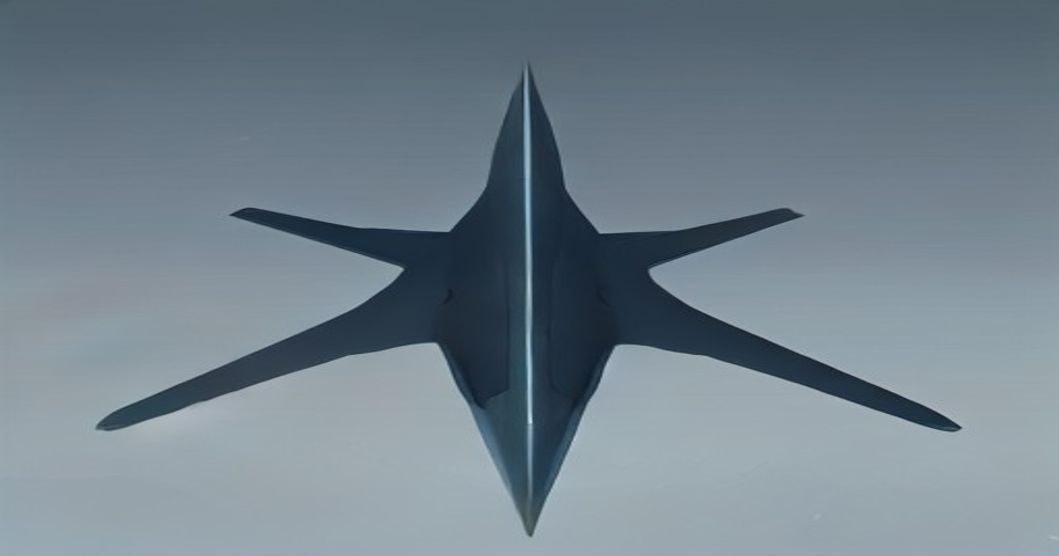
Boeing spent the better part of two decades and hundreds of millions of dollars building autonomous flight technology, and on 10 August 2026 it decided the smartest thing to do with that investment was hand it to a former courtroom adversary. Boeing and Archer Aviation announced definitive agreements under which Archer will acquire three Boeing subsidiaries: Wisk Aero, the autonomous eVTOL developer; SkyGrid, an airspace and air traffic management software company; and Insitu, a defence drone maker. Boeing takes an equity stake in Archer and becomes what both companies are calling a strategic partner.
Most consolidation announcements get dressed up as transformation and are really just balance sheet tidying. This one is more interesting than most, because it tells you something about where the capital in aerospace autonomy actually wants to go, and it is not where Boeing put it a few years ago.
From lawsuit to shareholder
The backstory is worth a paragraph, because it explains why this deal reads as a genuine reversal rather than a routine roll-up. Wisk began life as Kittyhawk, an electric aviation venture led by Sebastian Thrun and backed by Larry Page, before its Cora air taxi programme spun off into a joint venture with Boeing in 2019. Boeing kept funding it, including a $450 million investment in early 2022. Then, in April 2021, Wisk sued Archer for what it called brazen theft of trade secrets and patents, a fight that dragged on for two years and included Archer countersuing for a billion dollars in damages. The two sides settled in 2023, with Archer agreeing to make Wisk its exclusive autonomy provider.
Three years after that settlement, Archer now owns the company that once accused it of stealing its intellectual property. Under the terms disclosed in the regulatory filing, Boeing will receive newly issued Archer shares equal to 19.75% of Archer’s shares outstanding immediately before closing, which works out to roughly a 16.5% stake in the combined company after the deal closes. The deal still needs Hart-Scott-Rodino antitrust clearance, with closing expected by the end of the year.
Why Boeing is the interesting half of this story
It is tempting to read this purely as an Archer story, an air-taxi company suddenly tripling the scope of what it does. But the more revealing signal is what Boeing chose to give up. This is a company that funded Wisk’s autonomy programme for roughly two decades, through Kittyhawk and then the joint venture, and it is now handing that programme, plus SkyGrid and a defence drone business, to a competitor in exchange for a minority stake and a technology-sharing agreement.
Boeing’s own announcement frames it as pragmatic capital allocation rather than retreat. The company keeps access to Wisk’s autonomous flight technology for its current and future commercial and defence aircraft through the collaboration agreement, and it retains upside through its Archer shares, while redirecting fresh investment toward its core commercial airplane and defence businesses. That is a company deciding it does not need to own the autonomy stack outright to benefit from it. Whether that turns out to be discipline or a missed opportunity will depend entirely on how fast Archer’s platform actually scales, and that is not something either press release can settle.
What Archer actually gets
The part of the deal that changes Archer’s identity is Insitu, not Wisk. Wisk brings autonomous flight software and, combined across the three businesses, nearly two million flight hours of operational history. SkyGrid contributes airspace and air traffic management software, the kind of digital infrastructure that any large-scale drone or eVTOL operation eventually needs whether or not it wants to build it in house. But Insitu is the piece that turns Archer from an air-taxi developer with ambitions into a company with a functioning defence revenue line. Boeing’s own release describes Insitu as a profitable defence business generating over $200 million in annual revenue, with operations across 35 countries.
That is not a rounding error. Archer has spent years as a company defined mostly by certification milestones and pilot programme announcements, the standard rhythm of eVTOL development. Buying a profitable, internationally deployed defence drone business changes that math immediately, and it explains why Archer’s CEO Adam Goldstein called the transaction a watershed moment and described the company’s ambition as becoming a diversified platform with a rapidly growing revenue base, rather than a single air-taxi programme waiting for regulatory approval.
The organising idea Archer is putting around all of this is what it calls physical AI, built on its ZEE foundation model. The pitch is that autonomy learned across eVTOL, defence drones and air traffic software compounds, so that flight hours and operational data from one part of the business make the others better. It is a plausible thesis. It is also exactly the kind of platform narrative that every well-funded aerospace autonomy company is currently required to tell investors, so I would treat it as a stated ambition rather than a demonstrated result until Archer shows the crossover working in practice.
The consolidation logic
Set the specific companies aside and the pattern is a familiar one in a capital-intensive, slow-to-certify industry: rivals with overlapping technology bets eventually merge because building the same autonomy stack twice, at aerospace-grade reliability, is expensive and slow, and a decade of head-to-head litigation does not change that underlying economics. Advanced air mobility has been consolidating for a while, and this deal folds a major original equipment manufacturer’s internal autonomy investment directly into one of the sector’s public companies, rather than leaving Wisk to wind down or seek new backers on its own. For the wider field, that narrows the number of independent, well-funded eVTOL autonomy efforts by one, and it puts Boeing’s two decades of Wisk-era research inside a platform that is now explicitly chasing defence and air traffic management revenue alongside passenger transport.
For competitors like Joby, Beta and Vertical, the read is straightforward. Archer just added a profitable defence line, an airspace software business and Boeing as a shareholder and technology partner in a single transaction, while several rivals are still building their revenue case one certification milestone at a time. Whether that translates into a durable lead depends on execution across three newly acquired businesses at once, which is its own kind of risk. Big acquisitions integrate unevenly, and autonomy software from a company that used to sue you for allegedly stealing exactly that kind of software is not the easiest asset to fold into your own technology stack overnight.
What I will be watching between now and closing is not the antitrust review, which looks procedural given the parties involved, but whether Archer says anything concrete about how ZEE actually ingests Wisk’s flight data, and whether Insitu’s defence contracts keep performing once they sit inside a company whose public identity has, until now, been built largely around civilian air taxis.