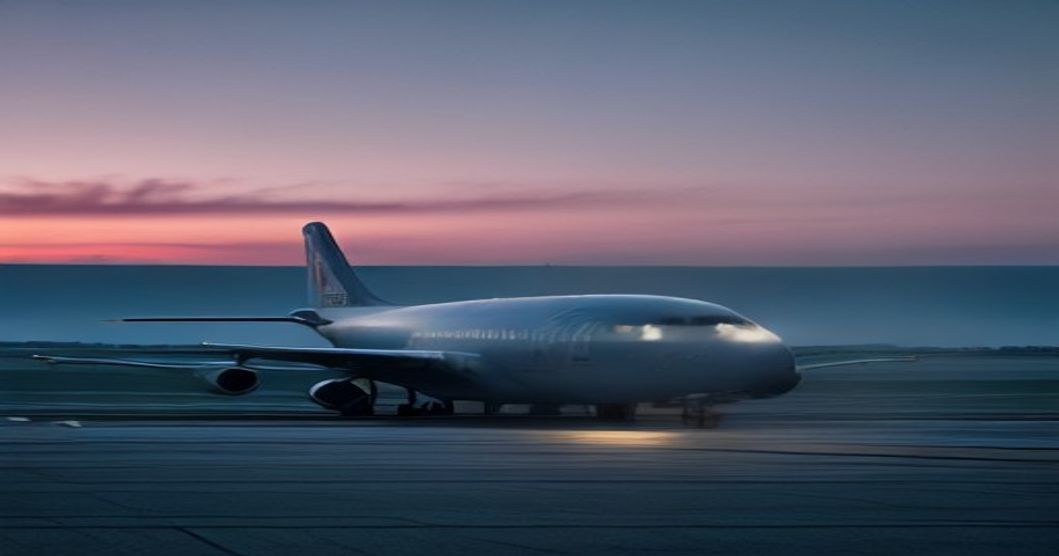
Five people died on a Sunday afternoon in Miami because a plane full of contact lenses could not stop. That sentence sounds almost absurd on its own, but it is what happened on 6 September, when an Amazon Prime Air Boeing 767-300 overran Runway 30 at Miami International Airport, ploughed through a perimeter fence, and struck a cleaning-company van and an SUV. The NTSB chairwoman called the scene “utter devastation”, and after reading the flight-data details released so far, I understand why she chose that phrase rather than a more clinical one.
My own work in aviation data has been on the airspace and surveillance side rather than runway performance, but the pattern here is one any aviation analyst recognises: a cargo flight on a familiar route, a landing that should have ended on the runway, and then a sequence of small facts that add up to something catastrophic. This one deserves attention beyond the tragedy itself. It touches the aging fleet of converted freighters that e-commerce logistics quietly depends on, and it reopens a runway-safety question that keeps recurring at US airports.
What happened
Prime Air Flight 7598 was on its third leg of the day, arriving from Luis Muñoz Marín International Airport in San Juan, Puerto Rico, when it touched down around 2pm and failed to stop before the end of the runway. Operated by cargo carrier 21 Air on Amazon’s behalf, the aircraft struck navigational equipment, hit a white cleaning-company van carrying seven people, broke through the airport’s perimeter fence, and collided with a Toyota Corolla Cross on a public road, coming to rest roughly 1,300 feet beyond the runway.
The five people who died were all in the van: Rolando Aleman Leon, Yoel Rodriguez Naranjo, Julio C. Pineda, Carlos Acosta Fajardo, and Javierkys Reyes Quevedo, aged between 47 and 75. Two more people in the van survived, along with the three occupants of the SUV. The two pilots were treated and released from hospital. Investigators later confirmed the aircraft was carrying more than 32,000 pounds of cargo, most of it contact lenses, a detail that says something about the unglamorous, high-volume freight this fleet actually moves.
What the flight data has shown so far
The NTSB’s investigator in charge, Chihoon Shin, gave the first substantive technical readout two days after the crash. There was no indication in the recorded data that the speed brakes or thrust reversers deployed as the aircraft rolled out. Those two systems, along with wheel braking, are the main tools a pilot has for converting a fast touchdown into a stopped aircraft on a normal-length runway. Not using the speed brakes or reversers changes a routine landing into a runway-length problem very quickly.
More striking is the throttle data. About 15 seconds before the recording ends, the aircraft’s throttles increased to values consistent with go-around thrust, the setting a crew uses when abandoning a landing to climb away and try again. That single data point has prompted real speculation among aviation-safety commentators about why the crew may have reconsidered the landing after touchdown. Shin was careful not to draw conclusions from it. “I’m not going to speculate about what should have been,” he said, noting that an aircraft performance study is still to come.
Ground speed at the final moment of available data was recorded at 65 knots, consistent with an aircraft still moving with real energy when the recording stopped. Investigators have both the flight data recorder, holding roughly 55 hours of data, and the cockpit voice recorder, holding more than two hours of audio, and they planned to interview the two pilots before releasing any transcript. A separate team is examining the aircraft’s engines and systems, and a meteorologist is reviewing weather at the time. BBC Verify’s own analysis found an active thunderstorm near the airport shortly before the crash, with wind gusts up to 26 knots, which will presumably be part of that weather assessment.
The runway-safety question that keeps resurfacing
One line from Homendy stood out to me more than any single data point. The NTSB will examine whether the runway should have had an engineered materials arresting system, or EMAS, calling it a key part of the investigation. EMAS is a bed of crushable concrete installed past the end of a runway, designed to slow and stop an aircraft that overruns it. It exists specifically for situations like this one: not to prevent an overrun, but to make the difference between an aircraft stopping in the safety area and an aircraft continuing at speed into a public road.
Whether Miami’s Runway 30 had adequate overrun protection, and what the FAA’s siting standards required or permitted, will likely become one of the investigation’s more consequential findings regardless of what caused the overrun itself. Runway overrun accidents are not new, and neither is the EMAS debate. What makes this one different is where the aircraft ended up: not in a runway safety area, but on a public road adjacent to the airport, close enough to normal daily traffic that people going about an ordinary workday were killed.
Why the aircraft itself matters
The 767 involved was 32 years old, originally built as a passenger aircraft before being converted into a freighter. That detail matters beyond this specific accident. Amazon Air does not rely on a fleet of purpose-built freighters alone. It leans heavily on ACMI operators, carriers that supply aircraft, crew, maintenance, and insurance under contract, often using converted passenger jets that can arrive with two or three decades of airline service already behind them. 21 Air is one of those operators.
That does not mean an older converted airframe is inherently less safe than a newer one. Commercial aviation’s maintenance and airworthiness regime is built around exactly this kind of long service life. But an accident involving a three-decade-old converted freighter on a routine cargo route is going to put that leasing and conversion model under a level of scrutiny it does not usually get. Expect regulators and airline customers alike to ask harder questions about inspection regimes and crew currency across the ACMI freighter fleet in the coming months, even before the NTSB reaches a probable cause.
What comes next
The crash closed Miami International Airport for hours on the day itself and led to more than 225 cancelled flights, with hundreds more delayed, during one of the busiest travel weekends of the US calendar. Two of the airport’s four runways remained closed days later while the investigation continued. Amazon said it was heartbroken by the loss of life and is cooperating with investigators; 21 Air issued its own statement of condolence and cooperation.
A final report on an investigation of this scale is usually a year or more away, though safety recommendations sometimes come earlier if investigators identify an urgent risk. Homendy’s framing of the agency’s purpose is worth sitting with. “That’s why we’re here, to prevent the next tragedy,” she said. “Our recommendations must be implemented, or we’ll be here again.” Given how much of modern logistics depends on aircraft like this one, flying routes like this one, into airports built for a different era of overrun protection, that warning applies well beyond Miami.